Discover the revolutionary pedagogical approaches that are transforming higher education.

Interdisciplinary and transdisciplinary approaches are not simply additional methodologies, but non-negotiable conditions for the effective implementation of active methodologies in Challenger Universities.
Interdisciplinarity breaks down traditional barriers between disciplines, enabling complex problems to be addressed from multiple perspectives and combining knowledge from diverse fields.
Transdisciplinarity goes a step further, transcending disciplinary boundaries to create new conceptual and methodological frameworks that integrate academic knowledge with non-academic, experiential and cultural knowledge, generating holistic solutions to complex problems.
Without these integrated approaches, methodologies such as Challenge-Based Learning or Project-Based Learning could not develop their full transformative potential, as real-world challenges require transcending traditional disciplinary boundaries.
Explore the most prominent educational methodologies used by Challenger Universities, all implemented under an interdisciplinary approach.
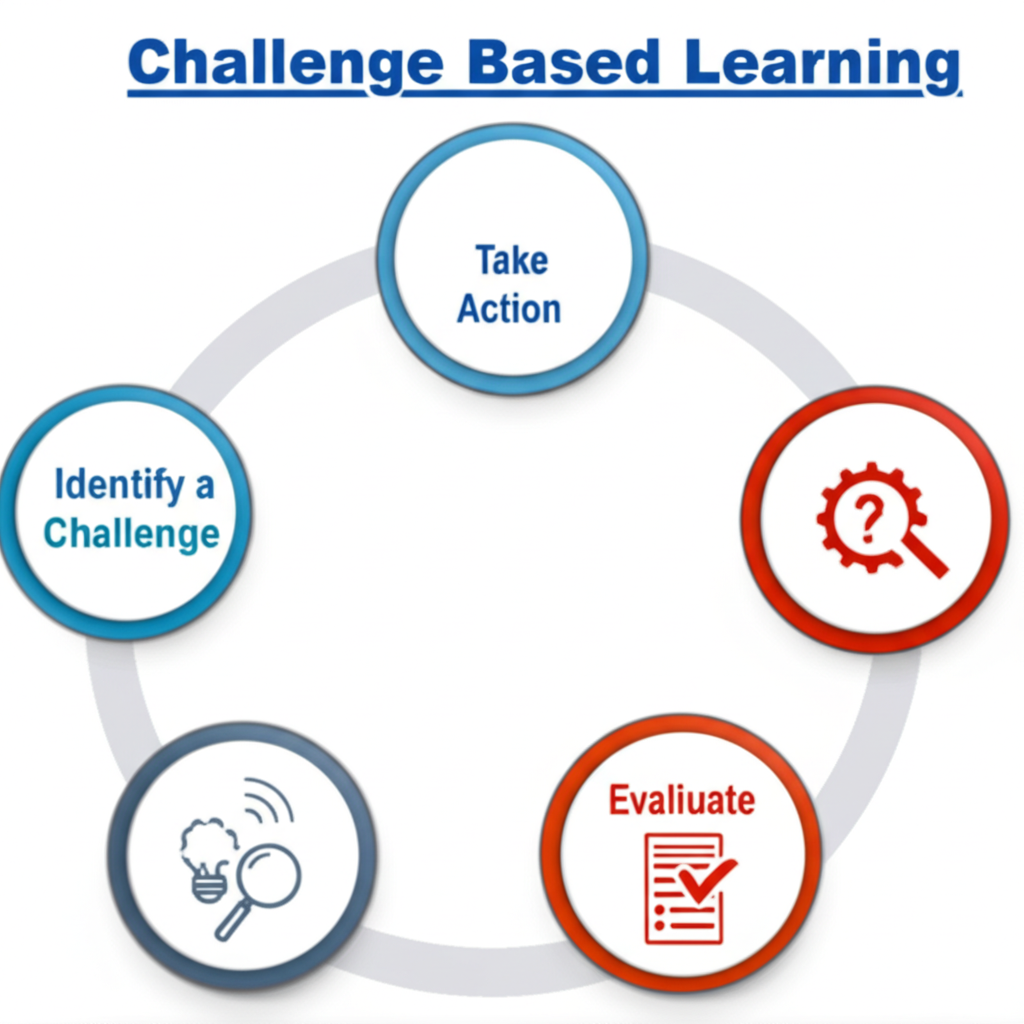
Solving real, complex problems that require innovative solutions

Creating products or services through meaningful projects
Project-Based Learning organizes learning around complex, authentic projects. Students acquire knowledge and skills by working over an extended period to investigate and respond to a question, problem or challenge. This methodology fosters autonomy, time management and the ability to create tangible products.
Detailed comparative analysis of the main active methodologies and their distinctive characteristics.
| Aspect | Challenge-Based Learning | Project-Based Learning | Problem-Based Learning |
|---|---|---|---|
| Starting point | A real, open-ended challenge or problem | A project with defined objectives | A specific problem with established parameters |
| Final product | Not predefined, emerges from the process | Defined from the start in most cases | Defined, usually a specific solution to the problem |
| Focus | Innovative solutions to complex problems | Creation of a specific product or outcome | Problem-solving process |
| Real-world connection | Very high, with direct impact | High, but can be simulated | Moderate, often case studies |
| Interdisciplinarity | Integral and necessary | Common but not always necessary | Variable depending on the problem |
| External collaboration | Frequent with organizations and communities | Possible but not essential | Less common |
All methodologies implemented in Challenger Universities share the interdisciplinary approach as their fundamental foundation. This approach enables the integration of knowledge from multiple disciplines, the development of cross-cutting skills, and the ability to address complex problems from diverse perspectives, preparing students for real-world challenges.