A methodology that transforms education through the creation of meaningful projects.


Project-Based Learning (PBL) is a methodology that organizes learning around projects, where students acquire knowledge and skills by working over an extended period to investigate and respond to an authentic, complex question, problem or challenge.
This methodology has its roots in the constructivist theories of Jean Piaget and Lev Vygotsky, and has evolved to become a central educational approach in many innovative higher education institutions.
Develops project management and teamwork skills
Fosters creativity and innovation
Creates tangible outcomes that can form part of a professional portfolio
Connects multiple disciplines in a meaningful context
The pillars that support Project-Based Learning as a transformative methodology.
Projects address problems or questions relevant to students that connect with the real world, providing context and purpose to learning.
Projects culminate in the creation of products, presentations or concrete solutions that demonstrate learning and can be shared with a broader audience.
Teamwork is essential, promoting the distribution of responsibilities, effective communication and the development of social and leadership skills.
A structured approach to developing meaningful and effective projects.
Definition of objectives, scope, timeline and resources needed for the project. This phase establishes the foundation for the entire process.
Clear definition of goals and expected outcomes
Assignment of roles and responsibilities within the team
Development of a detailed work schedule
Identification of project resources and constraints


Collection and analysis of relevant information for project development. This phase provides the necessary knowledge base.
Comprehensive search for information and background
Critical analysis of data and diverse sources
Consultation with experts and stakeholders
Documentation of findings and key learnings
Project development, applying knowledge and skills to create a product or solution. This is the phase where ideas become reality.
Prototyping of initial solutions and testing
Iteration and continuous product improvement
Implementation of collaborative development processes
Practical application of interdisciplinary knowledge


Communication of results, process evaluation and reflection on acquired learning. This phase closes the cycle and consolidates learning.
Public presentation of results to a real audience
Objective evaluation of achievements and impact
Critical reflection on the process and learnings
Project documentation for professional portfolio
Challenger Universities that have adopted Project-Based Learning as a fundamental part of their educational model.
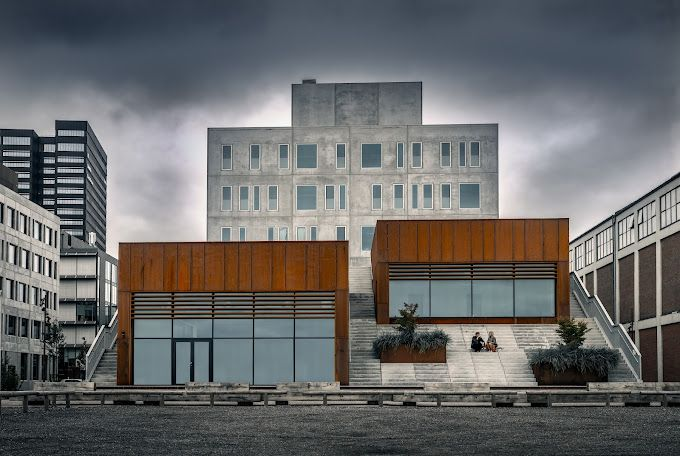

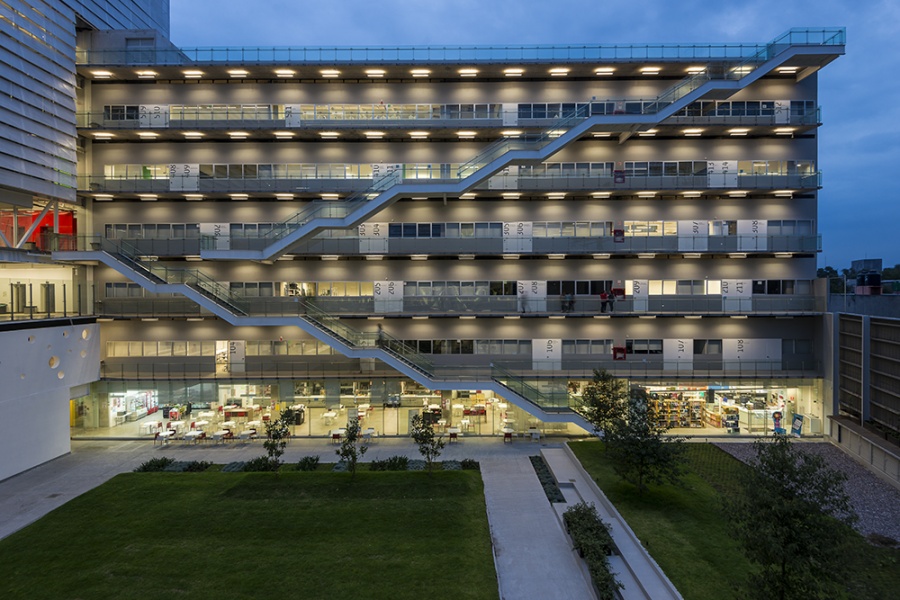
CENTRO implements an approach focused on real projects that integrate elements such as sustainability and social innovation in their design, technology and innovation programs.
Project example:
Development of sustainable design solutions for urban problems in Mexico City, collaborating with businesses and local government.
Practical example of how a project is developed at LEINN

A team of Olin College of Engineering students developed EcoPackage, a biodegradable packaging system for e-commerce, as part of a semester-long project with objectives and deliverables clearly defined by their professors.
Planning
Definition of technical requirements, research on biodegradable materials and timeline establishment according to project specifications.
Development
Creation of iterative prototypes, resistance and biodegradability testing, and design refinement based on faculty feedback.
Implementation
Small-scale production of the final packaging and detailed documentation of the manufacturing process.
Results
Presentation of the final product to a panel of professors and industry representatives, earning an outstanding grade and the interest of a local company.
Impact on students' academic, professional and personal development
Project management and strategic planning
Teamwork and collaborative leadership
Effective communication and idea presentation
Creative resolution of complex problems
Deep connection between theory and practice
Long-term knowledge retention
Contextual understanding of abstract concepts
Practical application of interdisciplinary knowledge
Development of a professional project portfolio
Practical experience highly valued by employers
Development of professional networks and mentors
Ability to adapt to changing work environments
Complementary material to deepen your understanding of Project-Based Learning
Setting the Standard for Project Based Learning
John Larmer, John Mergendoller, Suzie Boss (2015)
Project Based Learning: Inspiring Middle School Students to Engage
Jason Haap & Jana M. Craig-Hare (2018)
PBL Starter Kit: To-the-Point Advice, Tools and Tips
John Larmer (2009)
Real-World Projects: How do I design relevant and engaging learning experiences?
Suzie Boss (2015)
BeChallenge
Complete active methodology learning ecosystem that facilitates the design, implementation and evaluation of projects, integrating project management and collaborative ideation functionalities.
Trello
Kanban board-based project management tool that facilitates collaboration.
Asana
Team project management platform with task and deadline tracking.
Miro
Collaborative digital whiteboard that enables visual ideation and teamwork.
GitHub
Platform for managing collaborative software project development.
"Project-Based Learning not only teaches students to create products, but to think like creators and take responsibility for their own learning."
John Larmer, Editor-in-Chief of the Buck Institute for Education